

Korean Beef Bowl with Sweet and Savory Ground Beef
Note: This post may contain affiliate links. That means if you click on a link and make a purchase we may receive a small commission. Thank you!
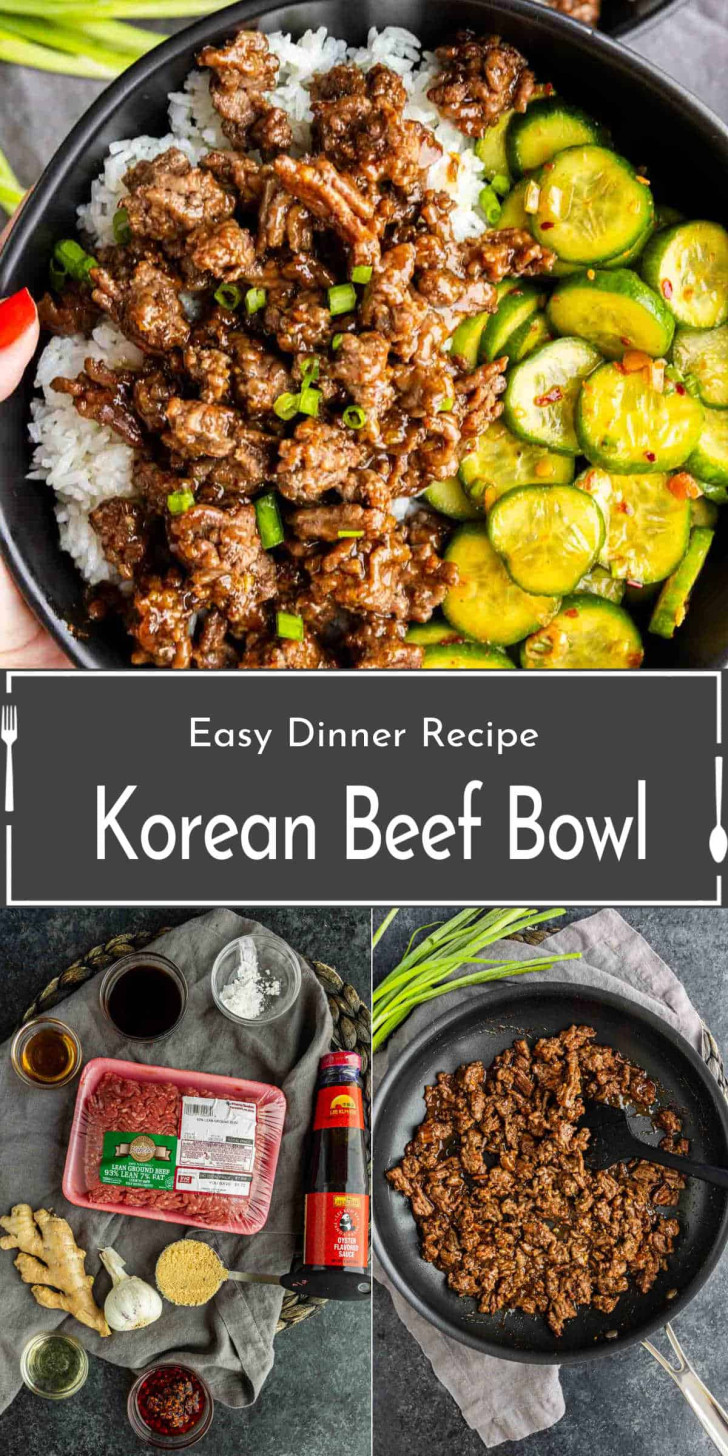
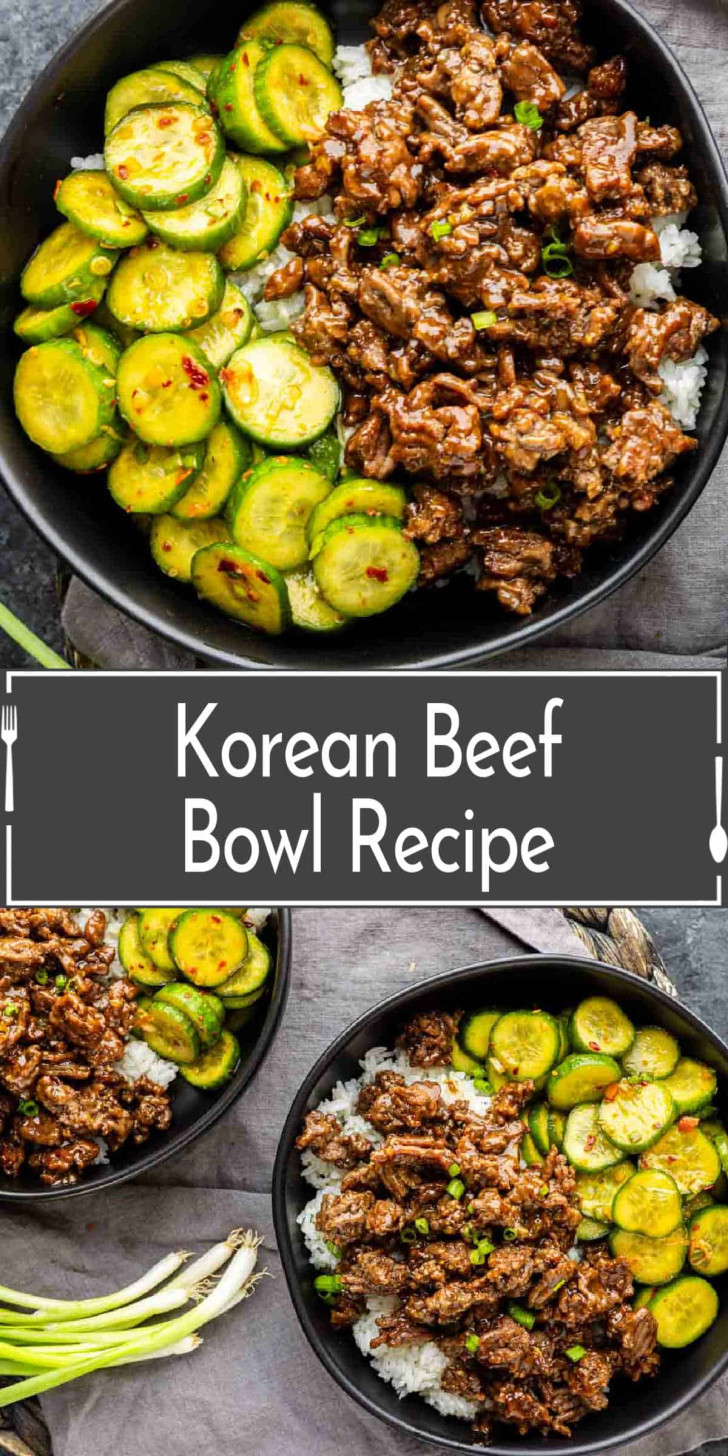
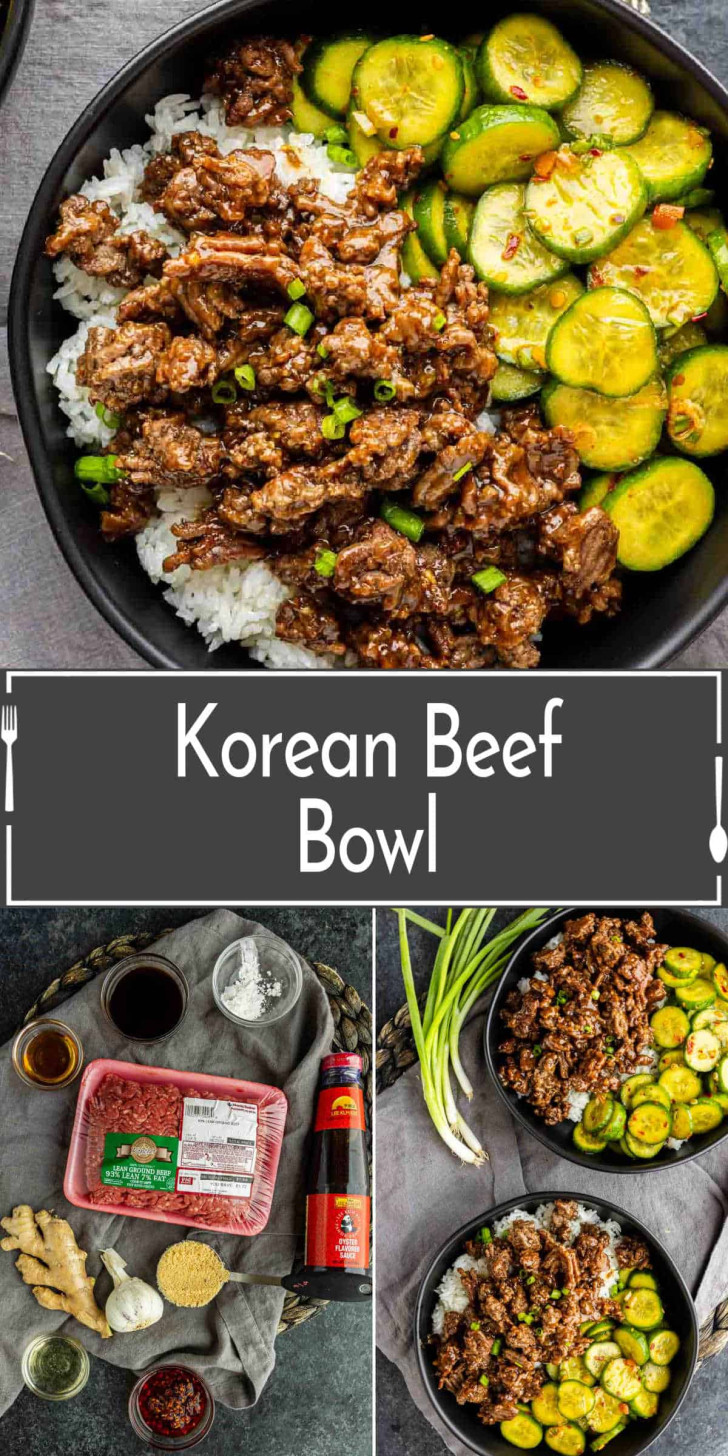
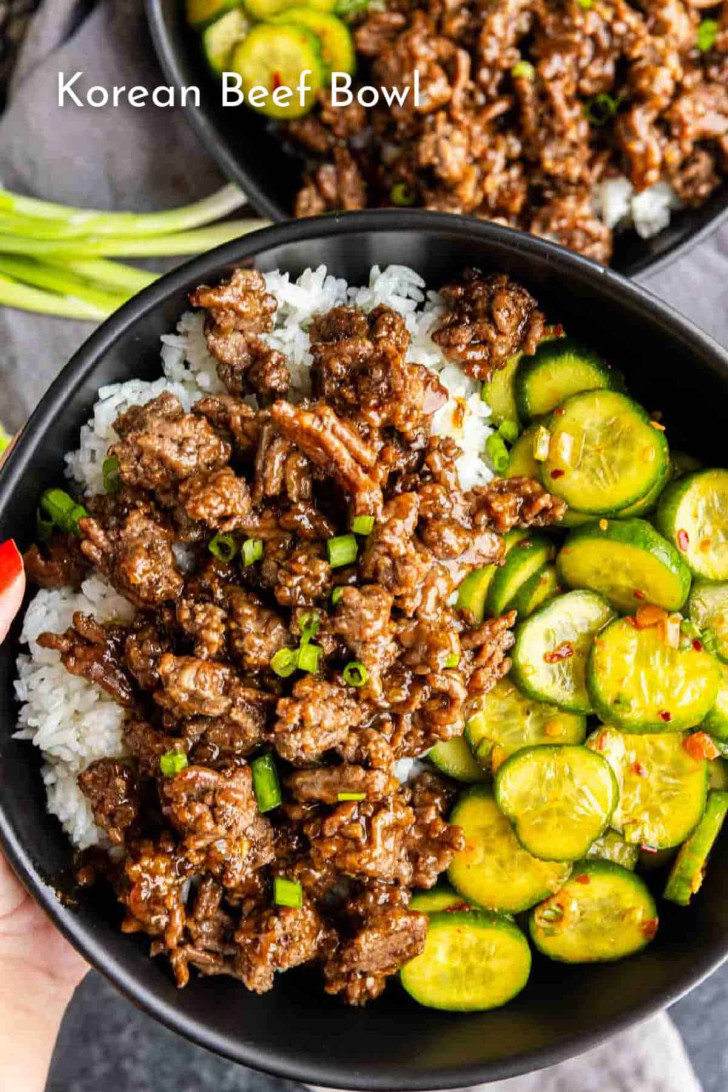
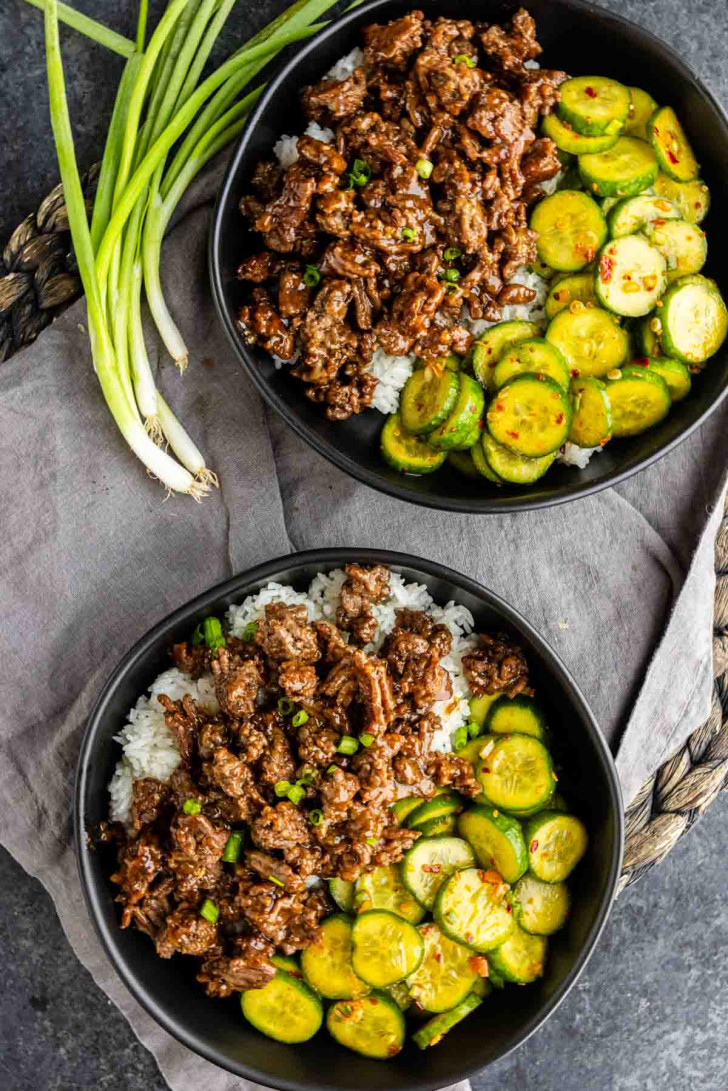
Make this easy Korean beef bowl with ground beef, garlic, ginger, and a sweet-savory sauce. Serve over rice with crunchy chili crunch cucumber salad.
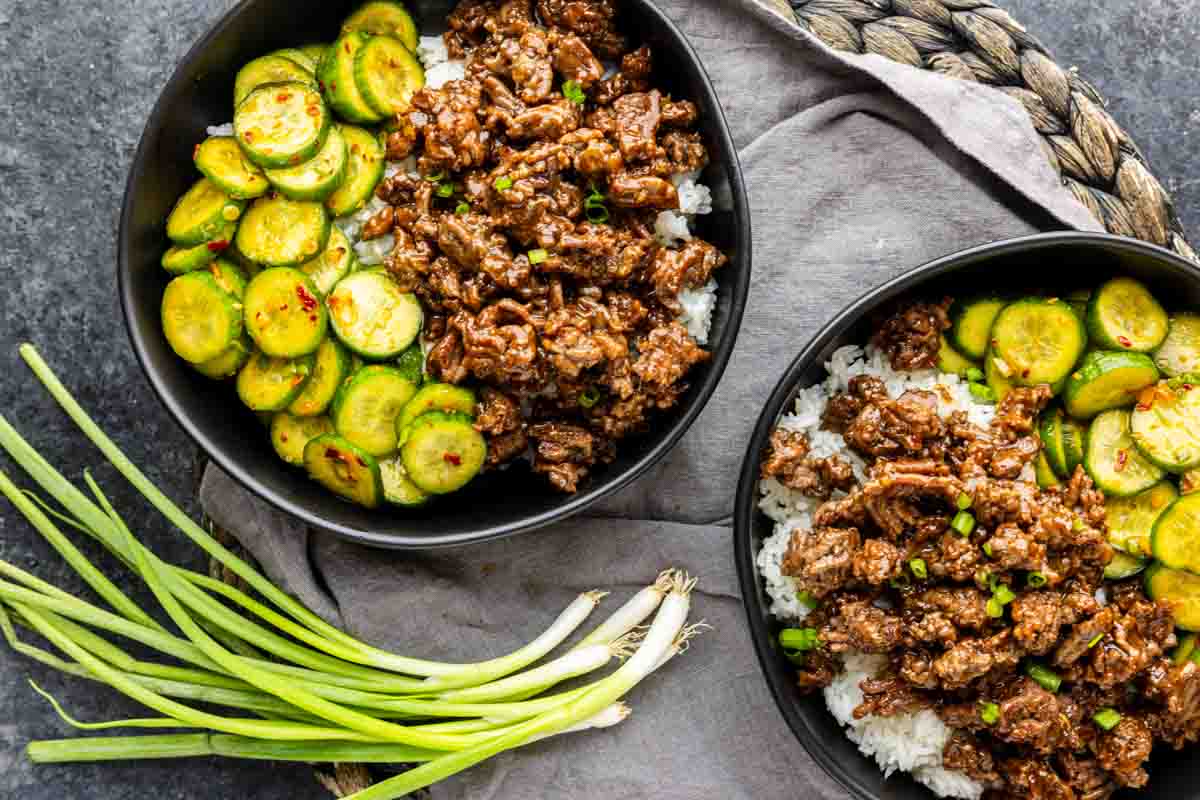
This Korean Beef Bowl turns a pound of ground beef into a sweet and savory dinner with fresh garlic, ginger, and a glossy sesame-soy sauce. Spoon it over warm rice and serve it with our chili crunch cucumber salad for a little heat and plenty of crunch. It’s a simple way to give that package of ground beef in the fridge a new dinner assignment!
Why You’ll Love This Recipe
The flavor starts before the sauce goes in. Spreading the beef across the pan and leaving it alone gives the underside a chance to brown, adding a little crust and a deeper savory flavor.
While the beef cooks, you whisk the sauce together in a small bowl. Brown sugar balances the soy sauce, rice vinegar adds a little tang, and fresh garlic and ginger keep it from tasting like just another sweet sauce. A small amount of cornstarch helps it cling to the crumbled beef.
The beef itself has no added chile heat, so you can keep the bowls mild or bring in some spice with the cucumber salad. Everyone gets to build a bowl that works for them.
If you love easy dinners like this Korean beef bowl, add our blanket dumplings, dumpling lasagna, and one pan baked dumplings to your meal plan next. They’re three tasty ways to get your dumpling fix without spending the evening folding wrappers—and that chili crunch cucumber salad makes a great side for all of them!
Is This the Same as Beef Bulgogi?
This is a Korean-inspired ground beef bowl with sweet and savory flavors. Our beef bulgogi uses thinly sliced beef and an overnight marinade, while this recipe uses ground beef with a sauce added during cooking. Choose this version when you want to skip the slicing and marinating.
Ingredients You’ll Need
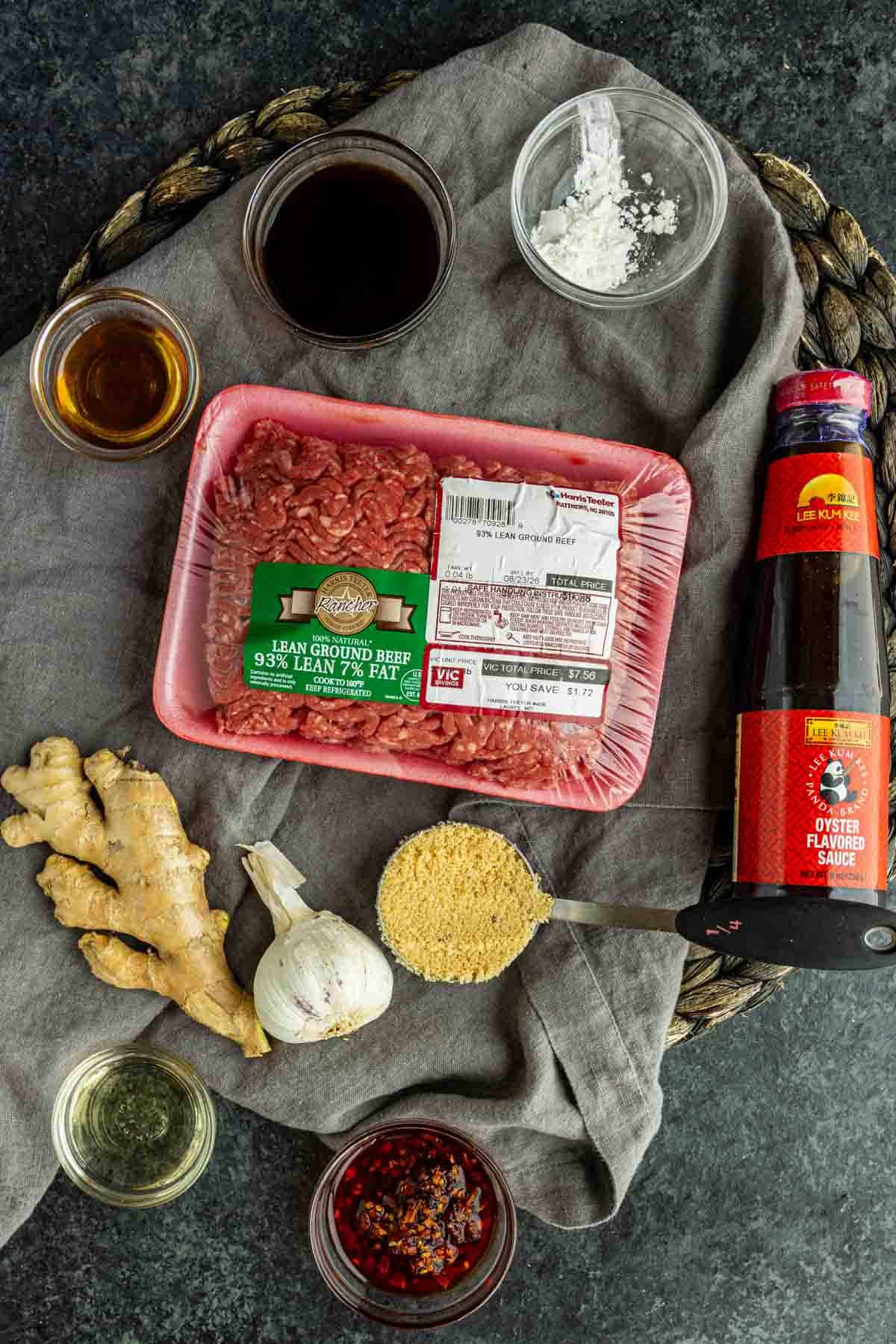
- Ground beef: The base of the bowl. Lean ground beef is a useful choice if you want less grease in the pan.
- Soy sauce: Gives the sauce its savory, salty base. Reduced-sodium soy sauce is an option if you prefer less saltiness, especially with the oyster sauce also in the mix.
- Brown sugar: Adds sweetness and a light molasses flavor to balance the soy sauce and vinegar.
- Garlic: Finely mince the cloves so the garlic spreads evenly through the sauce.
- Sesame oil: Adds sesame flavor and richness. Toasted sesame oil has a more pronounced nutty flavor than untoasted oil.
- Rice vinegar: Adds a gentle tang. Choose unseasoned rice vinegar so you aren’t adding extra sugar and salt.
- Oyster sauce: Adds concentrated savory flavor. It’s a thick bottled sauce, and a little goes a long way.
- Fresh ginger: Grate it finely so you get its warm, bright flavor without large pieces.
- Cornstarch: Thickens the sauce as it heats. Whisk it into the unheated sauce until no dry lumps remain.
Have cooked rice and chili crunch cucumber salad ready for serving. The full ingredient measurements are in the recipe card below.
How to Make Korean Beef Bowl
Step 1 – Brown the beef. Heat a large pan over medium-high heat. Add the ground beef, breaking it apart and spreading it in an even layer over the bottom. Cook for 5 minutes without moving it around so the underside develops a browned crust.
Step 2 – Whisk the sauce. While the beef cooks, combine the soy sauce, brown sugar, garlic, sesame oil, rice vinegar, oyster sauce, fresh ginger, and cornstarch in a small bowl. Whisk until well combined and the cornstarch is smoothly blended in.
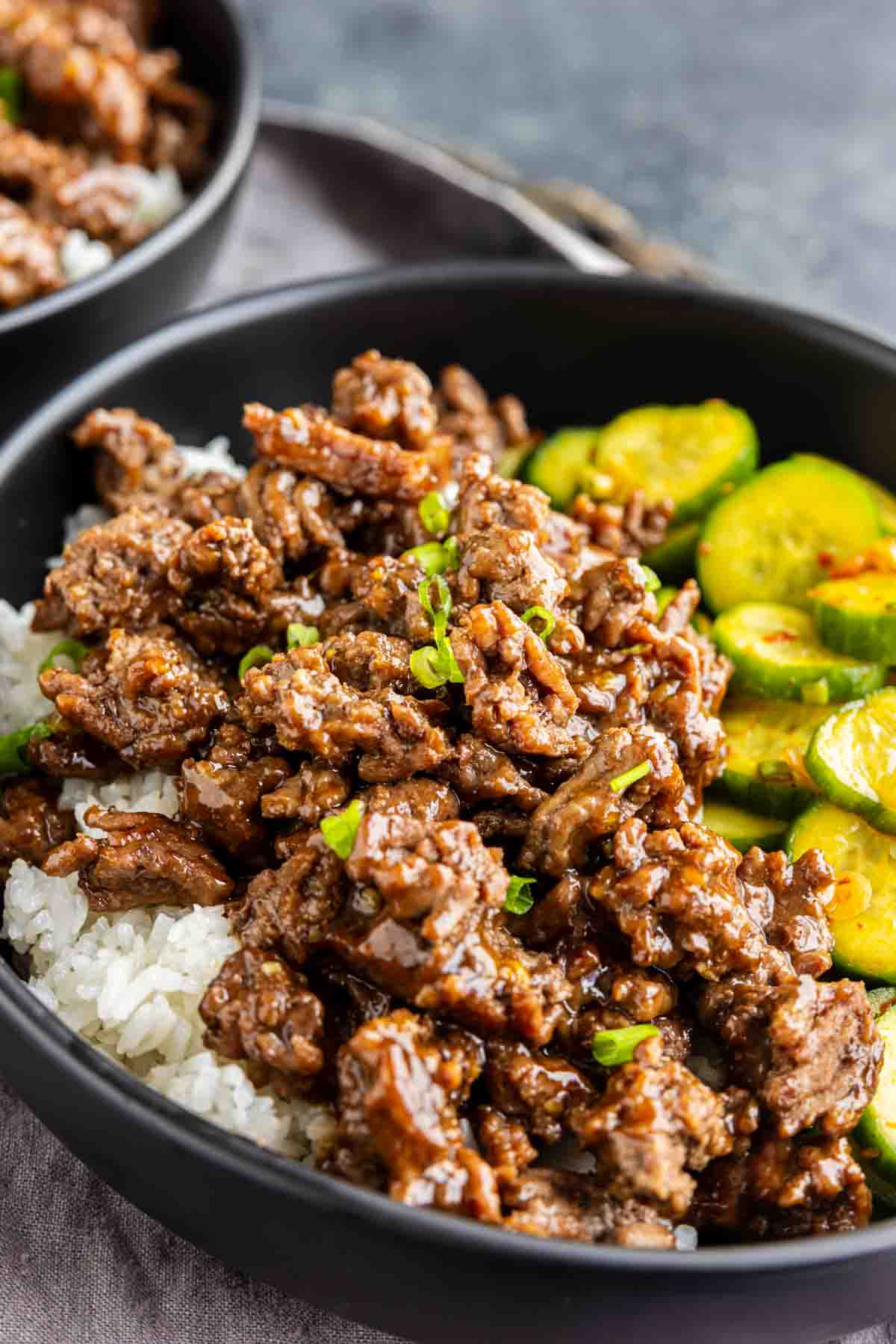
Step 3 – Coat and finish cooking. After the initial 5 minutes, pour the sauce over the beef. Stir, turning the meat and breaking apart any larger pieces so everything gets coated. Continue cooking for 2–3 minutes, until the sauce thickens into a glossy coating. Make sure the ground beef is fully cooked and reaches 160°F; continue cooking if needed.
Step 4 – Build the bowls. Spoon the beef over cooked rice and serve with chili crunch cucumber salad on the side. Keep the cucumbers out of the hot pan so they stay cool and crunchy.
Expert Tips & Tricks
- Give the beef room. Use a pan large enough to spread the meat across the bottom. A crowded pile traps moisture and makes browning harder.
- Whisk the sauce again before pouring. Cornstarch can settle while the bowl sits. A quick stir gets it back into the mixture.
- Start the rice first. The beef has a short cooking time, so get your rice going before heating the skillet, or use ready-to-heat rice.
What to Serve with Korean Beef Bowls
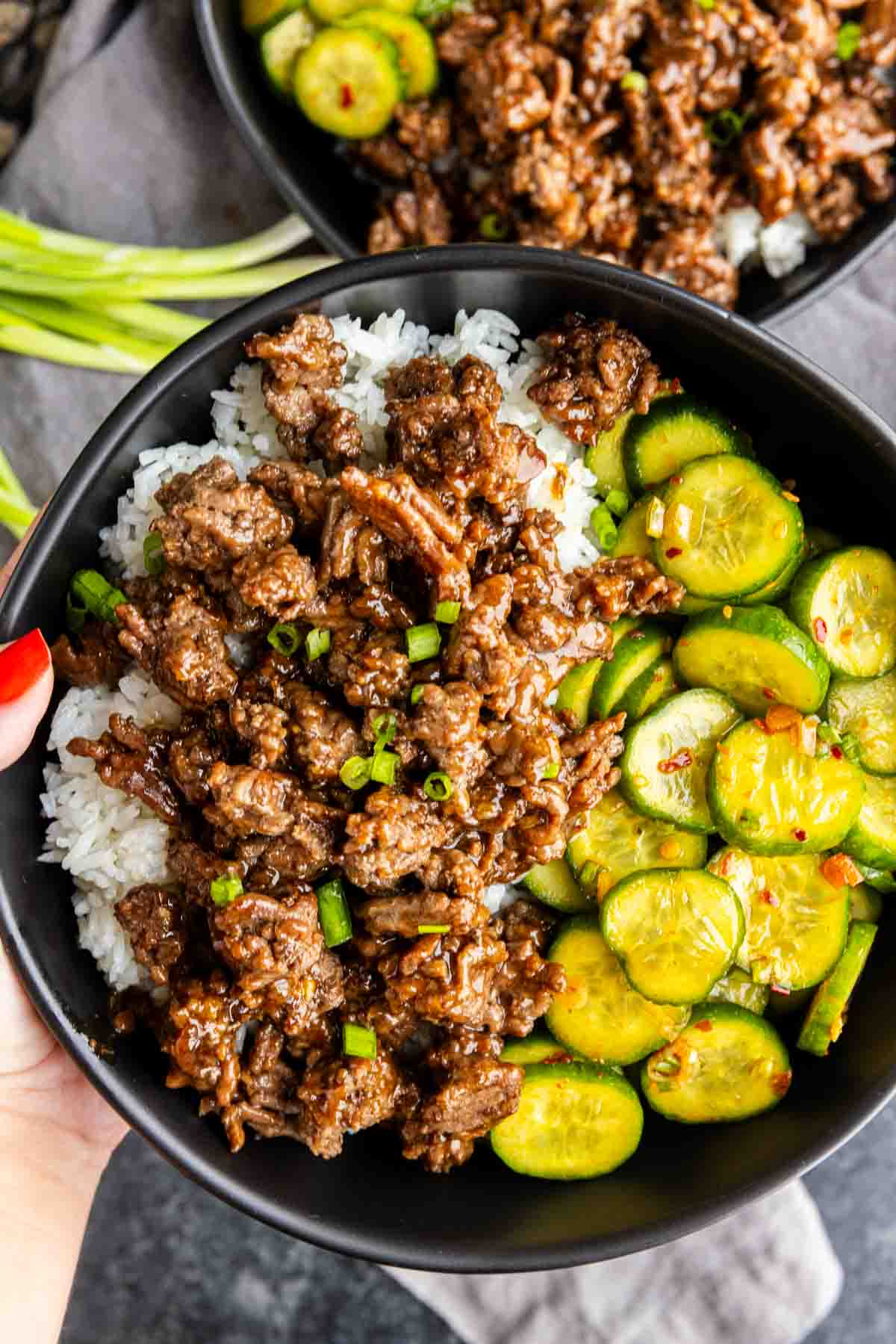
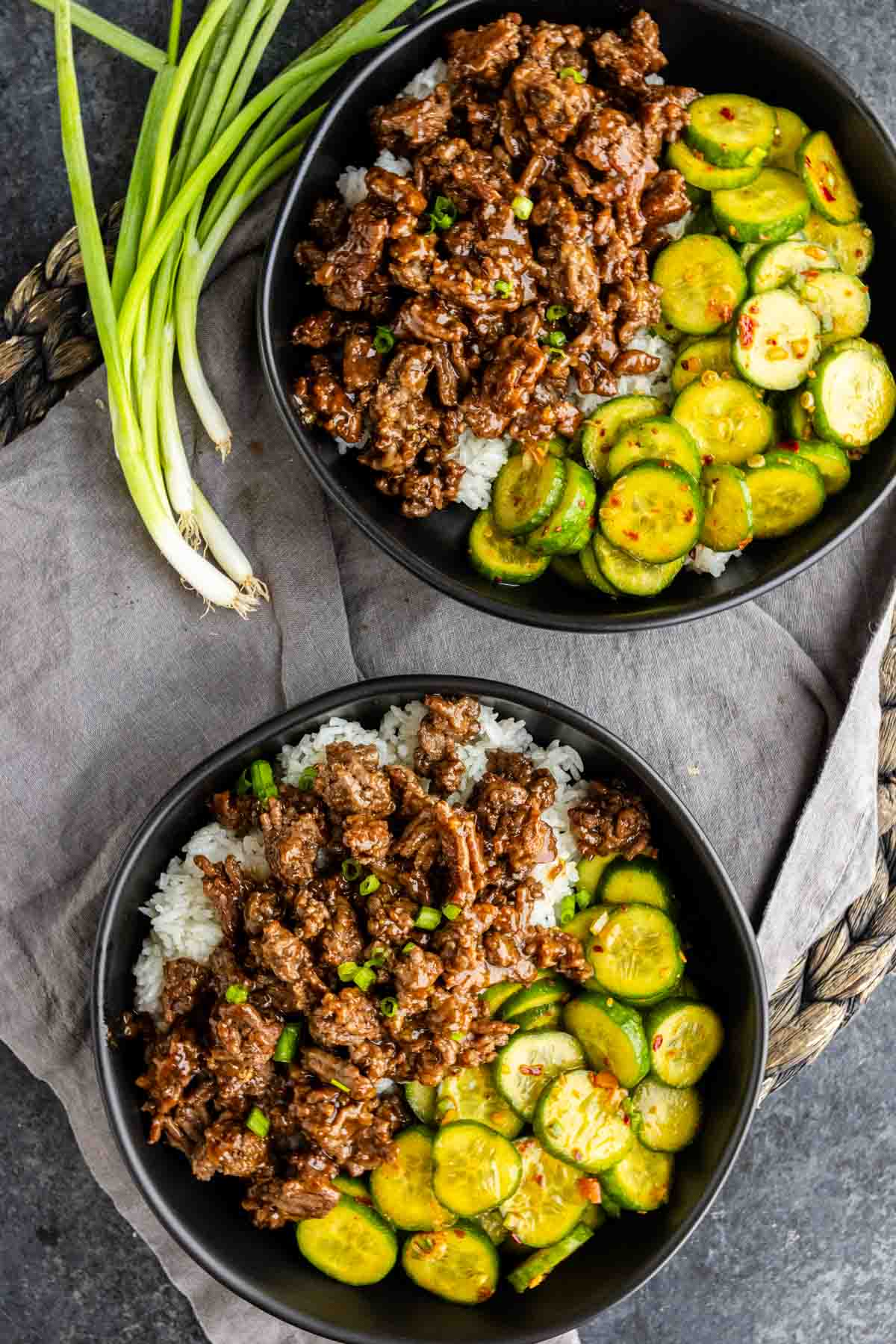
White rice, jasmine rice, or brown rice makes a good base for the saucy beef. Add the cucumber salad and you have warm, savory beef alongside something cool, tangy, and crisp. I’d serve the salad with a slotted spoon so the dressing doesn’t collect at the bottom of the rice bowl.
For extra vegetables, add steamed broccoli, shredded carrots, or cooked edamame. Sliced green onions and sesame seeds are optional finishing touches, and a little chili crunch on top adds heat.
If you’re putting together a larger dinner, our crispy rice is another side option with plenty of texture. Serve it in the bowls in place of the other rice.
How to Store and Reheat
Refrigerate: Transfer leftover beef to shallow airtight containers and refrigerate within 2 hours of cooking, or within 1 hour if the temperature is above 90°F. Keep refrigerated at 40°F or below and use within 3–4 days. Store the cucumber salad separately from the beef and rice.
Freeze: Freeze the cooked beef and sauce in a freezer-safe container for up to 3 months for best quality. Portion it before freezing if you want to reheat just enough for one or two bowls. Thaw overnight in the refrigerator.
Reheat: Warm the beef in a skillet over medium-low heat with a small splash of water to loosen the sauce. You can also microwave it in a covered, microwave-safe bowl in short intervals, stirring between each. Reheat to 165°F throughout, then add your rice and fresh toppings. These temperatures and storage practices follow USDA guidance for leftovers.
Frequently Asked Questions
Yes, but brown the beef in batches if it won’t fit in an even layer in your pan. Double the sauce ingredients as well. Use a pan large enough to combine everything afterward, and allow extra time as needed for the larger batch to finish cooking and the sauce to thicken.
The sauce needs to heat to a simmer for the cornstarch to thicken it. Make sure the sauce is bubbling gently as you stir. Moisture released by the beef can also thin the mixture. The goal is a light coating on the meat, not a thick gravy.
Use gluten-free tamari in place of the soy sauce and choose an oyster sauce labeled gluten-free. Check the remaining packaged ingredients, including the chili crunch and soy sauce used in the cucumber salad.
Yes! Try cauliflower rice, cooked noodles, or lettuce cups. Cook noodles separately before adding the beef, and drain cauliflower rice well so extra moisture doesn’t water down the sauce.
Yes. Mix it up to a day ahead, cover, and refrigerate. Whisk it well before adding it to the pan because the cornstarch may settle on the bottom.
You can leave it out, but the finished sauce will have less savory depth. A mushroom-based vegetarian oyster-style sauce is another option, though flavor and saltiness vary by brand. Avoid automatically replacing it with extra soy sauce, which could make the dish too salty.
Like this recipe?
Make sure to follow us on Instagram and Pinterest for more recipes like this.
Easy Korean Beef Bowl (One-Skillet Ground Beef)
Ingredients
- 1 pound Ground beef
- ¼ cup Soy sauce
- ¼ cup Brown sugar
- 3 cloves Garlic, finely minced
- 1 tablespoon Seasame oil
- 1 tablespoon Rice vinegar
- 2 teaspoons Oyster sauce
- 1 teaspoon Fresh ginger, grated
- 1 teaspoon Cornstarch
Instructions
- Heat a large pan over medium-high heat. Add the ground beef breaking it apart and spreading it out in an even layer over the bottom of the pan. Cook for 5 minutes without moving it around to get a nice crust on one side.
- While the meat cooks combine the soy sauce, brown sugar, garlic, sesame oil, rice vinegar, oyster sauce, fresh ginger, and corn starch in a small bowl and whisk together. Set aside.
- After the meat has cooked for 5 minutes pour the sauce in and stir everything together moving the meat around to fully coat it in the sauce. Continue to cook for 2-3 minutes until sauce thickens.
- Serve over rice with a side of chili crunch cucumber salad
Nutrition
